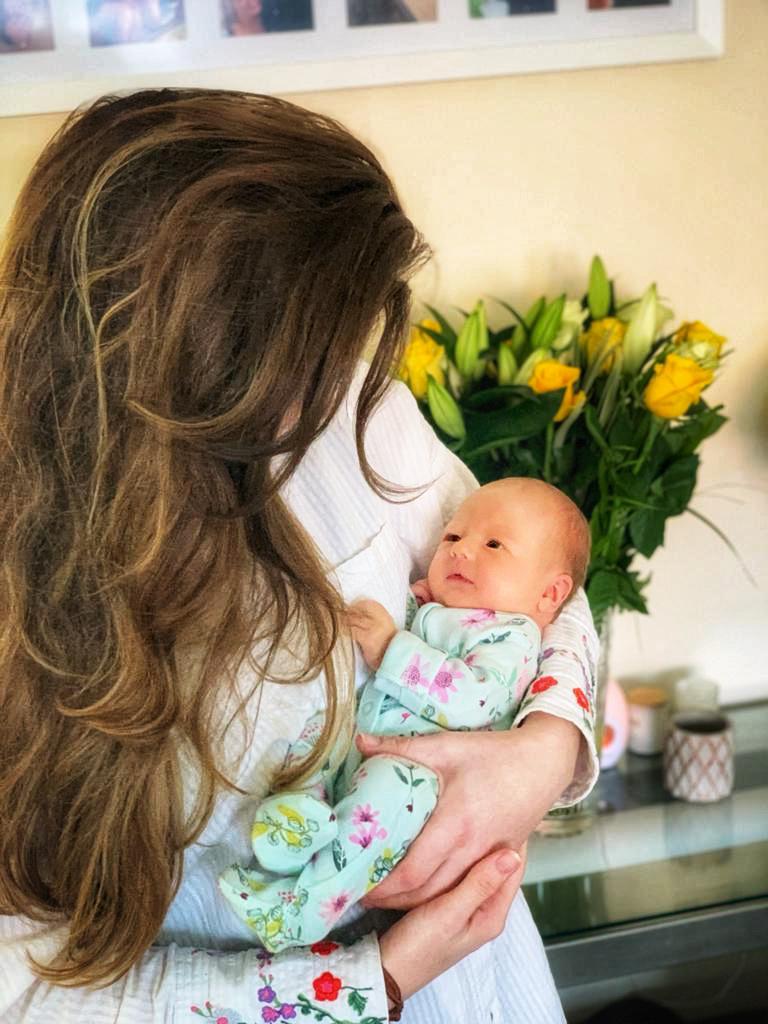
I want to start by saying something I really wish someone had said to me in those early postpartum months.
You are not failing. You are depleted. And those two things are very, very different.
I remember that season of new motherhood where everyone around you seems to think you should be bouncing back, whatever that even means, and you’re sitting there wondering why getting through a basic day still feels like such an effort. Why you can’t think straight. Why you keep crying and you’re not entirely sure what about. Why the exhaustion goes so much deeper than the broken sleep can explain.
Here’s what I know now, both from my own experience and from the women I work with: most of the time, what looks like struggling is actually your body communicating something really specific. It needs replenishing. And nobody has told you how.
This is what’s actually going on
Pregnancy is one of the most nutritionally demanding things your body will ever do. From the very beginning, your body prioritises your baby, drawing on your own stores to build their brain, their bones, their immune system. By the time you give birth, a significant number of women are already running low on iron, omega-3 fatty acids, and vitamin D before the physical recovery from birth has even started.
And then if you’re breastfeeding, that continues. Your body will keep drawing on your stores to nourish your milk. If you’re not replacing what’s being taken, the gap widens. I want to be really clear that this is not a reflection of how well you’re looking after yourself. It is just biology doing what biology does.
The symptoms of depletion can be genuinely hard to separate from the general exhaustion of new motherhood, which is part of why it goes unaddressed for so long. We dismiss it. We just put it down to having a baby. But exhaustion that runs deeper than sleep explains, hair falling out in handfuls around three months, mood that crashes without warning, struggling to concentrate or find words, a low-grade flatness sitting underneath everything. These things are worth paying attention to.
Where food comes in
I am always going to come back to food first. Not a complicated supplement schedule, not a protocol, not a plan that requires energy you don’t currently have. Real, nourishing food that works with where you actually are right now.
Iron is a priority, particularly in those early weeks. Red meat, liver, lentils, spinach, beans. If you’re relying on plant sources, pair them with something vitamin C-rich so your body can absorb more of it. It genuinely makes a meaningful difference.
Omega-3 fatty acids, specifically DHA and EPA, are important for your mood and brain function in a way that often gets overlooked postpartum. Oily fish is your best food source here. Salmon, mackerel, sardines, anchovies, herring. I know sardines don’t have the most glamorous reputation, but a tin of sardines with some avocado on toast is honestly one of the best postpartum meals going and takes about four minutes.
Healthy fats matter more broadly too. Nuts, nut butters, avocado, good quality oils. They help steady your blood sugar and energy through the hormonal ups and downs that make early motherhood feel so unpredictable. When your blood sugar is crashing, your mood follows. That’s not a character flaw, that’s physiology. And it’s something we can actually do something about.
Warm, easily digestible food is your body’s best friend right now. Soups, stews, bone broth if you have access to it. Traditional cultures across the world arrived at this same conclusion independently, and they were right. Your digestion is still recalibrating after birth. Easy, warming, nourishing food is exactly what it needs.
The bit nobody says
I know that reading a list of foods to eat while you’re in survival mode can feel a little hollow. Because most of the time the barrier isn’t knowing what to eat. It’s having the time, the headspace, the free hand, and the functioning brain cell to actually do it.
So I want to give you permission to make this as simple as possible. Batch-cooked meals in the freezer before baby arrives. Snacks you can eat one-handed. A tin of sardines in the cupboard. Nut butter on anything. The goal is nourishment within reach, not a perfect plate at a perfectly scheduled mealtime. Good enough and actually eaten is always better than ideal and untouched.
You don’t have to figure this out on your own
This is what I want you to take away from this. Depletion is not a permanent state. It is not just the reality of having had a baby. With the right foundations in place, most women feel a meaningful difference, and it doesn’t have to be complicated to get there.
If you’ve been reading this and thinking yes, that’s me, I want to hear from you.
I work with women one-to-one to look at the full picture: your birth, your feeding journey, your symptoms, your life, and what’s actually realistic for you right now. We build from food foundations first, and we go from there together.
The best place to start is a free Discovery Call with me and we can explore the things that would help you most in this season of life.
[Book your free Discovery Call here →]
I’m here, my love. To quote Bluey… “you’re doing great”. And you don’t have to keep running on empty. I’ve got you!


 Nourished By Kimberley
Leave a comment