
If you’ve found yourself standing in the shower lately watching handfuls of hair disappear down the drain, this one’s for you.
You’d heard about postpartum hair loss. Most of us have. But hearing about it and then actually living it are two very different things. We’re told it’s a very normal part of postpartum, a right of passage as such.
So first, I want to say: the shock you feel is completely reasonable. It really is that dramatic for some women, and I was one of them. Handfuls of hair coming out, just even from touching it, nevermind washing or brushing it! It really got me down.
However, through my nutrition training, I’ve learnt that actually, we can do something about postpartum hairloss. You don’t have to just wait it out. There is real nutritional support possible and available. Let’s get into it!
Why it happens
During pregnancy, high oestrogen levels lock your hair into a growth phase. You stop shedding at the rate you normally would, which is why so many women notice thicker, fuller hair during pregnancy. The hair you’d normally lose every day just… stays. It’s part of that pregnancy glow!
Then your oestrogen drops after birth, and your body releases all of that accumulated hair at once. It usually peaks around four months postpartum, which is also often the point where women feel blindsided by how much is coming out.
Quite simply, it’s your body catching up. Everything you would have lost through pregnancy is just shed nearly in one go. (maybe this is an overdramatic way to put it, but it definitely can feel like it’s all in one go!)
The role your liver plays
Most hair advice focuses biotin. Biotin does have a role, particularly if you’re deficient, as a deficiency in this nutrient does contribute to hair loss. But there’s a layer to postpartum hair loss that needs considering:
Your liver has a significant job after birth. It needs to clear the drop in circulating hormones, and if it’s under pressure, that clearance slows down. When oestrogen lingers in the system longer than it should, shedding can be worse and last longer than it otherwise would.
Supporting your liver is, really, part of supporting your hair.
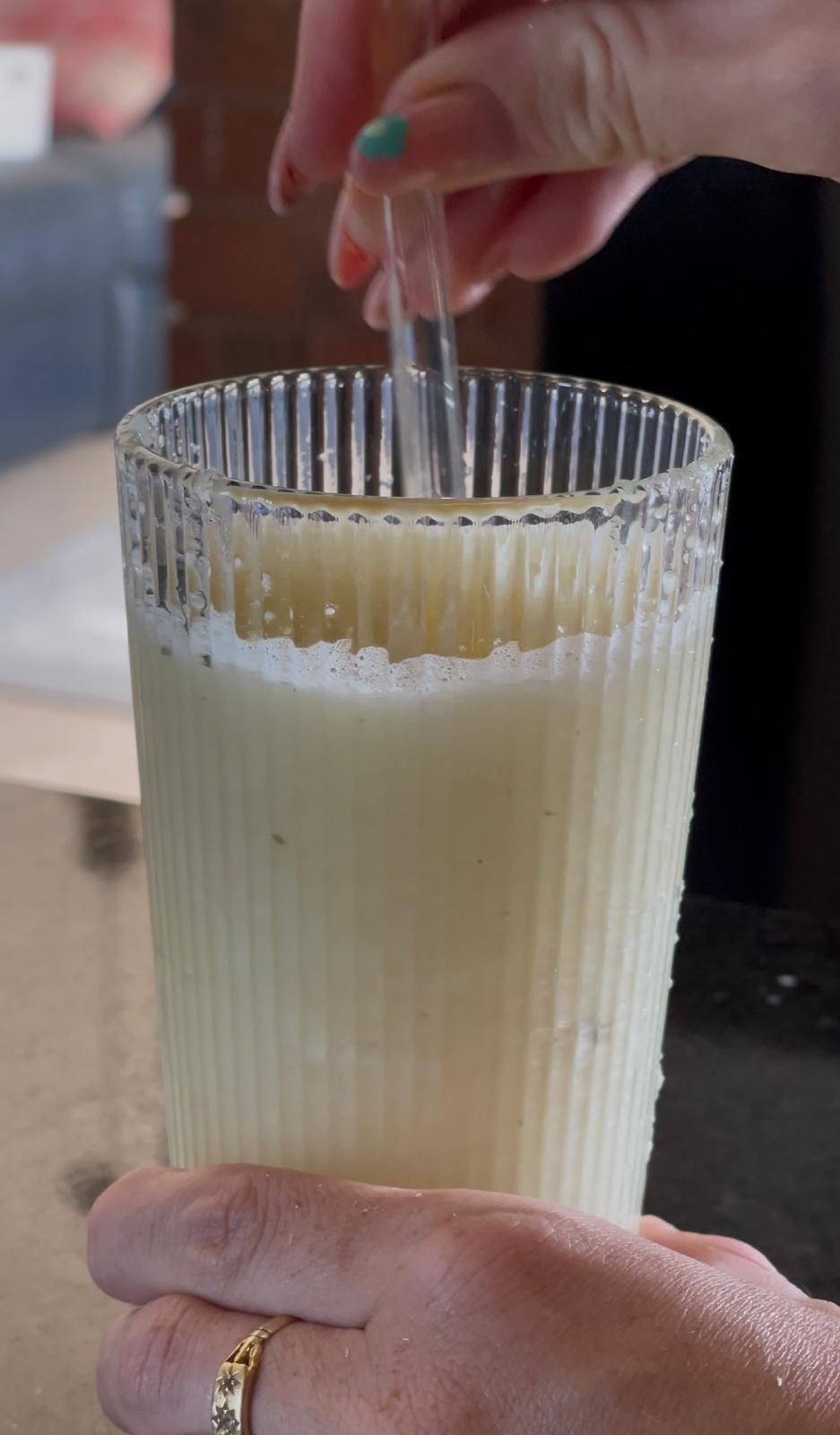
This is where wheatgrass comes in. It supports the liver in processing and clearing excess postpartum hormones, and it also contains silica (we’ll get to that below!), which directly stimulates hair regrowth. You can find it fresh, frozen, powdered, or in tablet form. Adding the powder to a smoothie or stirring it into water is the easiest way in. It’s not the most exciting thing you’ll ever drink and it definitely tastes “grassy”, but it earns its place on my list of hair and liver supporting foods!
Silica: the nutrient worth knowing about
Silica stimulates new hair growth rather than just supporting what’s already there. It’s the nutrient I’d reach for first if regrowth is the goal.
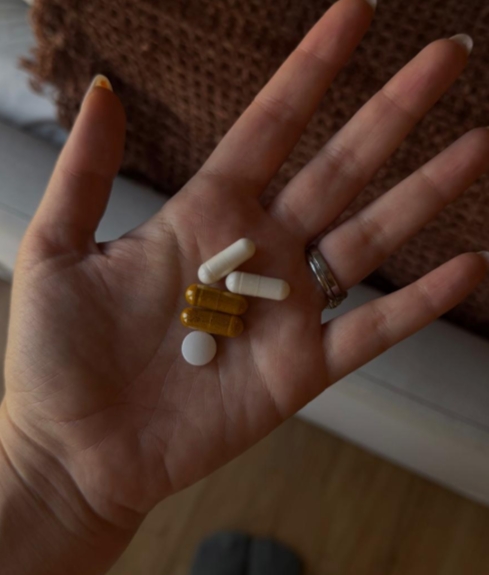
It sounds fake or artificial but you can actually eat your silica…food sources include oats, leafy greens, and cucumber. You can supplement silica but just be aware supplemental silica is usually sourced from horsetail.
Of course we’re going to talk about collagen
It’s well known as a beauty supplement, but it’s genuinely supportive for hair, skin, and nails postpartum, and it fits neatly into the food-first approach since you can get it through bone broth or collagen powder added to food or drinks.
When to look deeper
Postpartum hair loss is common and in most cases it settles on its own as your hormones rebalance. But if the loss feels extreme, carries on past six months, or comes with other symptoms you can’t quite explain, it’s worth digging a little further.
Hair loss postpartum can also be driven by iron deficiency, thyroid dysfunction, or adrenal fatigue, and all three of these are regularly missed because their symptoms look almost identical to just being a tired new mum. Fatigue, feeling flat, brain fog, slow recovery: these things get written off as normal when sometimes they’re pointing at something that can be supported.
If your instinct is telling you something feels off, trust that. Getting your iron, thyroid, and adrenals checked is a reasonable and worthwhile thing to ask for.
A quick summary of what to focus on (sorry this was a long one, but I’m passionate okkkk)
Wheatgrass supports liver clearance of excess hormones and provides silica for regrowth. Silica through food or supplementation stimulates new hair growth directly. A varied diet with sufficient healthy fats and omega 3s gives your body the building blocks it needs for recovery. And if loss feels excessive or prolonged, iron, thyroid, and adrenal function are all worth investigating.
This is the kind of thing that looks simple on a list but feels much more overwhelming when you’re actually in it, especially when you’re also feeding a baby, sleeping in broken chunks, and trying to keep everything else going.
You don’t have to figure it out alone.
If you’ve been reading this and thinking yes, that’s me, I want to hear from you.
I work with women one-to-one to look at the full picture: your birth, your feeding journey, your symptoms, your life, and what’s actually realistic for you right now. We build from food foundations first, and we go from there together.
The best place to start is a free Discovery Call with me. No pressure, no commitment, just a proper conversation about where you are and how I can help.




 Nourished By Kimberley
Leave a comment